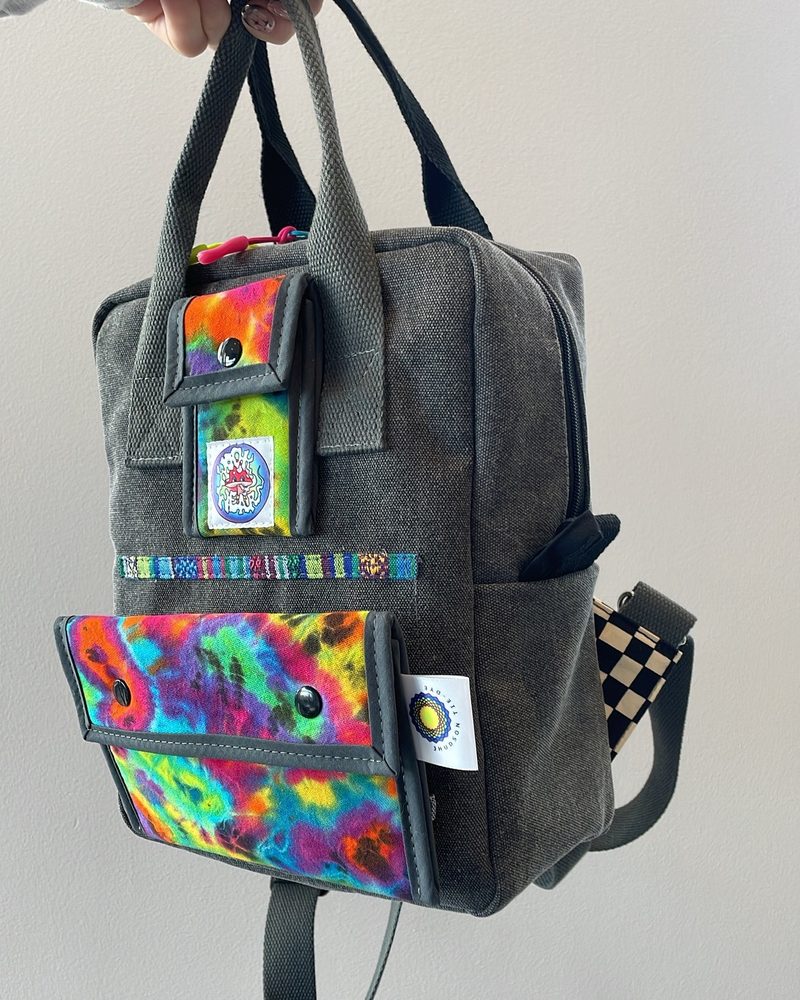
Patchwork is one of the oldest and most satisfying textile arts. At its heart, it's simple: take pieces of different fabrics, sew them together, and create something entirely new. But within that simplicity lies an enormous range of creative possibilities, from traditional quilt blocks to the wild, improvisational compositions that define Wook Wear's look.
Choosing Your Fabrics
The first rule of patchwork is that contrast is your friend. Mixing light and dark fabrics, combining different textures, and playing with scale in your prints creates visual energy. A piece made entirely from similar fabrics will look flat, no matter how perfectly it's sewn. But throw a chunky corduroy next to a smooth cotton print and suddenly things get interesting.
When selecting fabrics, pay attention to weight. Mixing a heavy denim with a lightweight cotton can work, but you'll need to interface the lighter fabric to prevent puckering. For bags and pouches, medium to heavyweight fabrics like canvas, denim, and corduroy are ideal because they hold their shape and stand up to daily use.
Cutting and Piecing
Accurate cutting is the foundation of good patchwork. A rotary cutter, self-healing cutting mat, and clear acrylic ruler are the holy trinity of patchwork tools. Mark your seam allowance clearly, usually a quarter inch for patchwork, and cut precisely. If your pieces are off by even a sixteenth of an inch, those errors compound across multiple seams and your final piece won't lie flat.
Piece your fabrics together with a consistent quarter inch seam. Press your seams to one side rather than open for stronger joins. When connecting rows, nest your seams so the bulk on one row faces the opposite direction from the next. This reduces thickness at the intersections and helps everything line up cleanly.
Going Improvisational
Traditional patchwork follows precise patterns and templates. Improvisational patchwork throws the templates away. You cut freehand, piece intuitively, and let the fabric tell you where it wants to go. This is the approach that drives much of Wook Wear's aesthetic. No two pieces are planned the same way because no two collections of scraps are the same.
Improv patchwork is incredibly freeing, but it does take practice. Start by sewing two scraps together, trimming the result into a new shape, and adding more. Build outward from a center point, rotating and flipping as you go. Don't overthink it. Some of the most striking compositions come from happy accidents.
From Scraps to Art
The beauty of patchwork is that nothing goes to waste. Every scrap, every offcut, every remnant from a previous project becomes raw material for the next one. In a world of mass production and disposable fashion, there's something deeply satisfying about turning a pile of fabric scraps into a bag or pouch that will last for years.