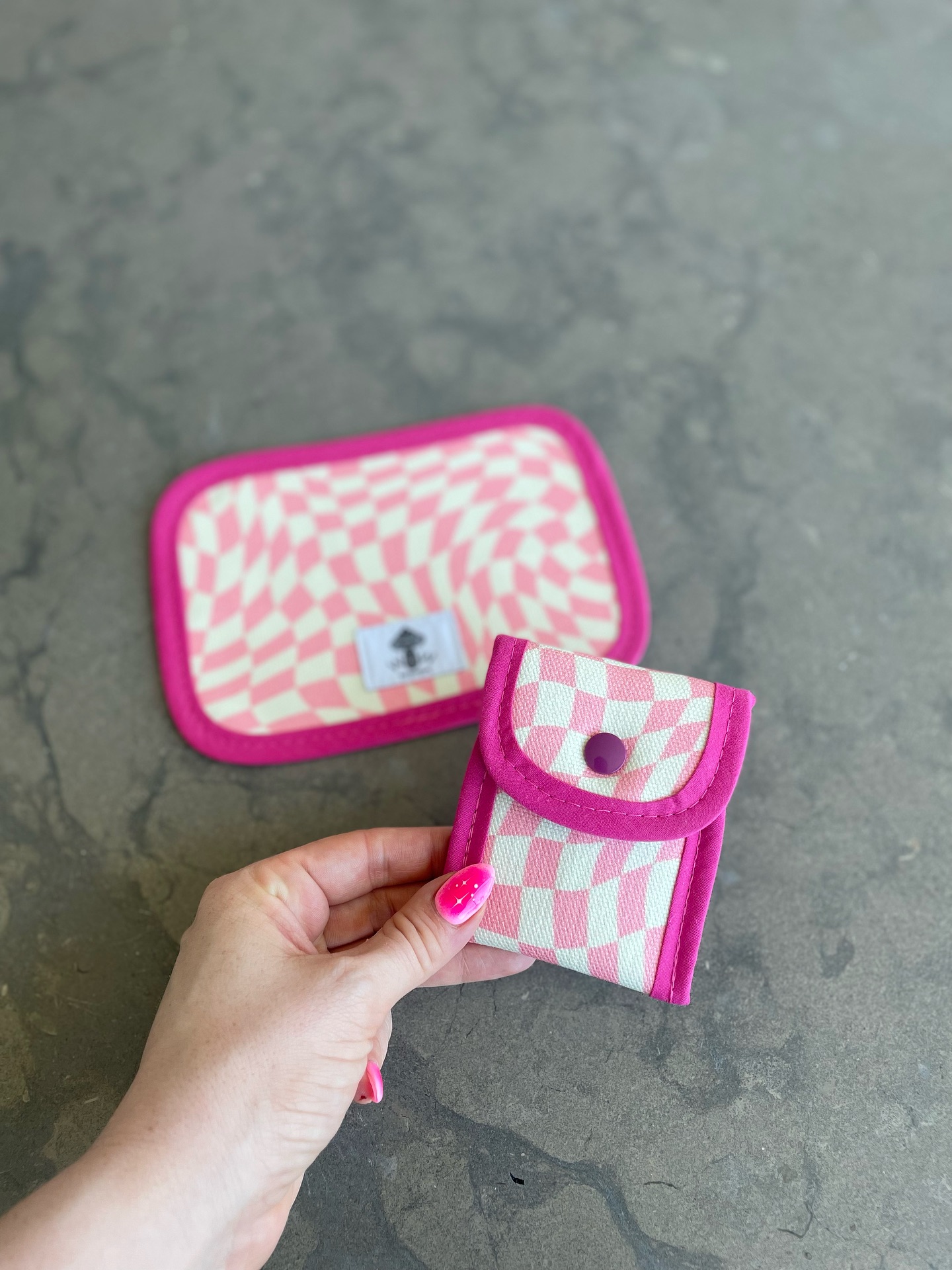
Every Wook Wear piece starts the same way: with a pile of fabrics on the worktable and an idea that needs to become real. The journey from that initial spark to a finished, ready-to-ship product involves more steps than most people realize. Here's what actually goes into making each piece.
Design and Fabric Selection
The design phase begins with fabric. Rather than sketching a design and then finding materials to match, the process often works in reverse. A new bolt of fabric arrives, maybe a wild checkerboard print or an unexpected sherpa color, and it sparks ideas about what it wants to become. What would pair well with it? What construction style would show it off best? The fabrics lead the way.
This is where the patchwork magic happens. Scraps from previous projects live in bins organized loosely by color and texture. Building a composition means pulling from these bins, laying pieces next to each other, auditioning combinations, and finding the arrangement that clicks. This part can take anywhere from ten minutes to an entire afternoon.
Pattern and Cutting
Once the design is set, it's time to cut. Base patterns exist for each product type: the prized possession pouch, the crossbody, the display mat, the buddy pouch. These patterns have been refined over hundreds of iterations, with seam allowances, hardware placement, and proportions dialed in precisely. The patterns get traced onto the wrong side of the fabric with chalk and cut with a rotary cutter on a self-healing mat.
Sewing and Construction
Construction follows a specific order for each product type. For a pouch, it typically goes: patchwork the outer panel, attach interfacing, sew the lining, install the snap hardware, join outer and lining panels, turn right side out, and finish the edges with blanket stitch binding. Each step has to happen in sequence because later steps depend on earlier ones being right.
This is where the sewing machine and hand stitching work together. The machine handles structural seams and topstitching, while hand sewing takes over for snap installation, edge finishing, and any decorative elements like sashiko stitching. A typical pouch takes between two and four hours from first cut to finished product, depending on complexity.
Finishing and Quality Check
Every finished piece gets a thorough once-over. Seams are checked for strength, snaps are tested for smooth operation, edges are inspected for consistent stitch spacing. Any loose threads are trimmed, and the piece gets a final press with a lint roller. Then it's photographed for the shop and stored in a clean, dry space until drop day.
The entire process, from fabric selection to finished product, is done by one pair of hands. That's both the challenge and the beauty of running a handmade brand. Every stitch carries the maker's intention, and every piece reflects the full arc of a creative process that values quality and authenticity above all else.