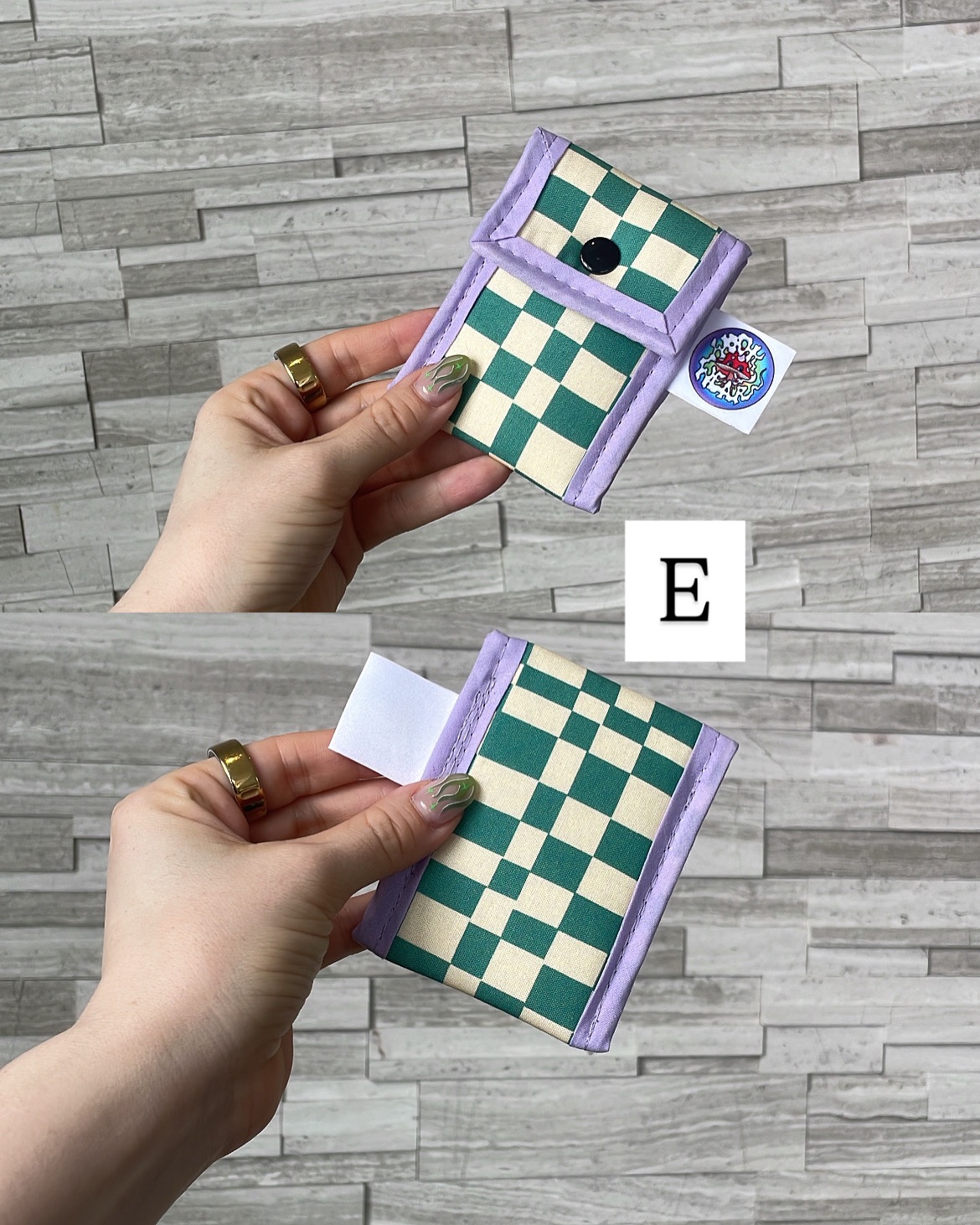
The checkerboard pattern is everywhere, and it has been for centuries. Chess boards, racing flags, diner floors, punk rock, ska music, skateboarding, and now handmade festival gear. Something about that simple alternating grid of contrasting squares speaks to people across cultures and eras. It's one of the most enduring patterns in design history.
A Brief History
Checkerboard patterns appear in some of the earliest known textiles, dating back thousands of years. Ancient civilizations used them in mosaics, weavings, and pottery. The pattern's appeal is rooted in its mathematical simplicity: it's the most basic way to create visual rhythm with two contrasting colors. Your eye bounces back and forth between the squares, creating a sense of energy and movement that more complex patterns sometimes lack.
In the twentieth century, checkerboard took on countercultural significance. The two-tone ska movement of the 1960s adopted the black and white check as a symbol of racial unity. Punk and new wave bands plastered it on everything from album covers to stage backdrops. Vans made the checkerboard slip-on sneaker an icon of skateboard culture. Each subculture added its own layer of meaning to the same ancient grid.
Why It Works on Handmade Goods
The checkerboard pattern is ideal for patchwork and handmade textiles because it transforms simple square cuts into something visually striking. You don't need complex templates or curved cuts. Just squares. Alternating two fabrics in a grid creates instant visual impact, and the regularity of the pattern makes slight handmade variations feel intentional rather than accidental.
At Wook Wear, the checkerboard shows up in a distinctly psychedelic way. Rather than the crisp, uniform grid of a factory-printed check, the handmade version uses warped proportions, unexpected color combinations, and mixed fabric textures within the grid. A pink and black checkerboard in corduroy and cotton hits differently than the same pattern in a mass-produced print. The texture, the slight imperfections, and the dimensional quality of real pieced patchwork give it life.
Warping the Grid
One of the most interesting things you can do with a checkerboard is break it. Stretch the squares into rectangles. Rotate the grid at an angle. Vary the sizes so some squares are larger than others. Introduce a third color for a single accent square. These small disruptions take the pattern from familiar to unexpected while maintaining the underlying rhythm that makes it work.
Optical illusions are another avenue. By manipulating the size and placement of checkerboard squares, you can create the impression of curves, depth, or movement on a flat surface. These warped checkerboards are a staple of psychedelic art and fit perfectly into the festival aesthetic. They catch the eye and reward closer inspection.
Making It Your Own
If you want to try a checkerboard patchwork project, start simple. Cut equal squares from two contrasting fabrics, arrange them in a grid, and piece them together with quarter inch seams. Once you're comfortable with the basic grid, experiment with scale, color, and proportion. Swap one fabric for a textured material like corduroy or sherpa. Offset every other row by half a square for a brick-lay variation. The checkerboard is a foundation, and what you build on top of it is entirely up to you.